October 2026
Validation and verification of a dairy emissions program with Logiag
In the dairy sector, most greenhouse gas (GHG) emissions come from the farm. In this context, agri-environmental consulting firm Logiag is pursuing an ambitious and urgent mission: reducing agricultural emissions at scale in the Canadian dairy value chain.
By achieving validation and verification from SustainCERT for its Dedicated Dairy Farms program, Logiag has unlocked collaborative climate action in the dairy industry. The program establishes a structured framework based on co-claiming and a centralized system for tracking and allocating impacts, enabling multiple stakeholders in the value chain to contribute to and benefit from the same source of verified GHG reductions.
The Dedicated Dairy Farms program creates a concrete mechanism to align climate incentives across farmers, processors, and other partners, while preserving consistency and transparency.
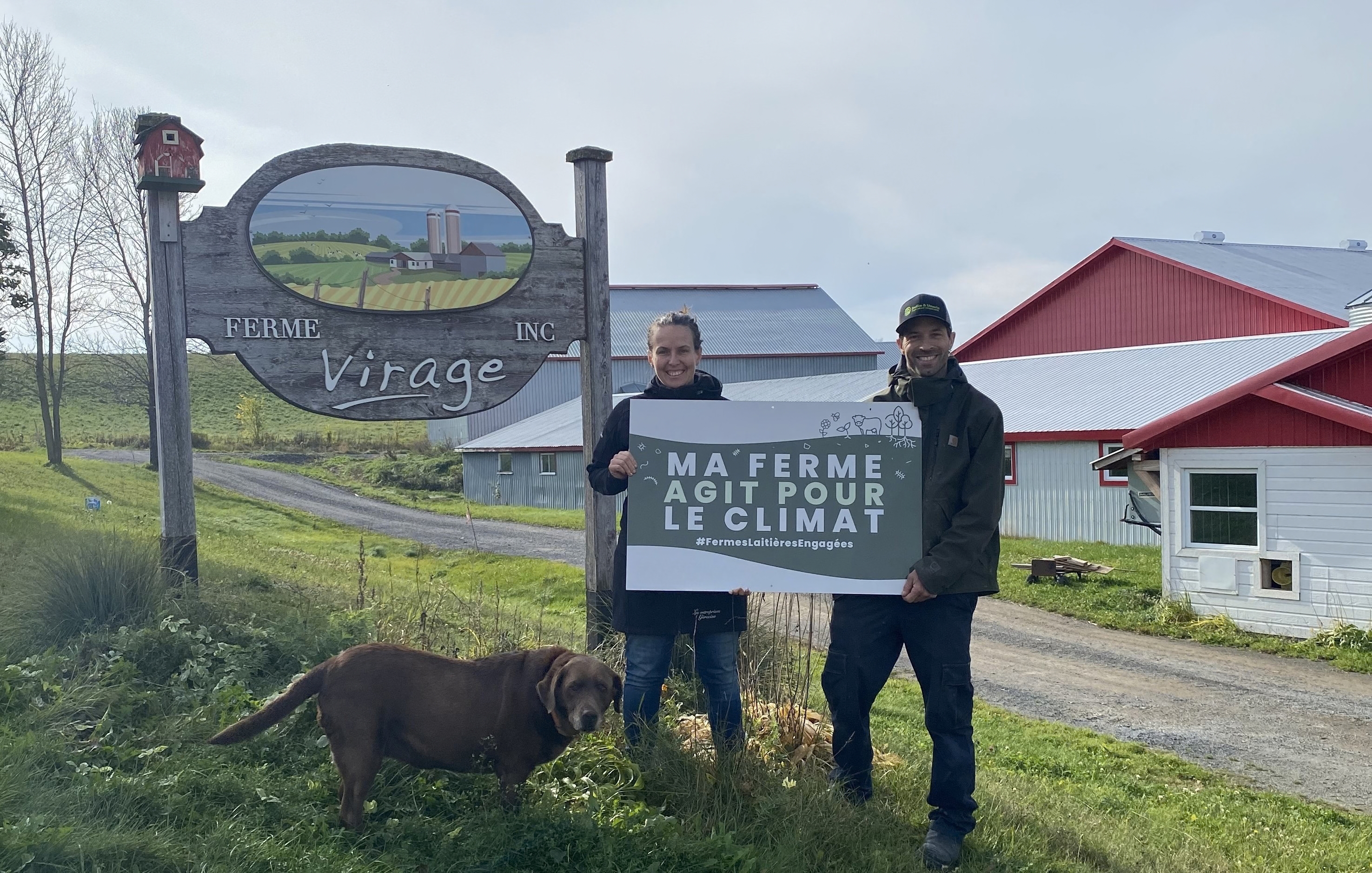
Caption: Farmers participating in Logiag's program
The program: Dedicated Dairy Farms
Logiag is a leading agri-environmental consulting firm based in Quebec, Canada. It combines agronomic expertise, agricultural engineering, and proprietary technologies such as LaserAg to help farmers design practical interventions that are economically viable, environmentally responsible, and socially acceptable.
Logiag’s program Dedicated Dairy Farms (Fermes Laitières Engagées) is an agricultural insetting program developed in collaboration with Quebec dairy industry partners. It helps dairy farms reduce their GHG emissions through whole-farm transition plans covering both herd and field management practices, designed and implemented jointly with each farmer based on their specific context and capacity. Emission reductions are quantified at the farm level using a proprietary calculator built on Holos, a whole-farm GHG model developed by Agriculture and Agri-Food Canada.
The program’s interventions include:
- Optimizing manure management
- Improving cow longevity and optimizing age at first calving
- Increasing the use of perennial hay in crop rotations
- Improving soil conservation practices
In 2023-2024, 15 participating farms achieved a total reduction of 1,831.82 tCO₂e. The initiative has demonstrated strong growth across the sector, expanding to 103 participating farms in 2025. Furthermore, the program has helped establish a credible framework for agricultural insetting, enabling value chain partners to collaborate around verified emission reductions while supporting the adoption of sustainable farming practices.
“At Logiag, our role is to turn climate ambition into concrete action on farms. Through our work with SustainCERT, we established a validated framework that grounds the Dedicated Dairy Farms program in real agricultural practices and ensures credible results.” – Charles Nault, CEO of Logiag
What challenges are addressed by validation and verification?
Before deciding to work with SustainCERT, one of Logiag’s main challenges was finding a rigorous and defensible way to validate its project, even though it did not fit within a conventional framework. The program combines multiple agricultural practices, relies on a bottom-up approach, and was developed in a context where few established methodologies existed for this type of initiative. In addition, the insetting concept was still relatively new and not yet widely understood across the market.
Logiag had both market and operational objectives in mind when entering the validation and verification process. From a market perspective, the goal was to build trust and integrity among industry partners. To meet the climate targets increasingly set by partners and their expectations for high-integrity climate solutions, the program had to demonstrate a robust methodology and measurable outcomes.
From an operational perspective, Logiag wanted to develop a practical and scalable system that could maximize GHG reductions while remaining accessible to farmers. This meant creating a multi-practice approach that reflected the realities of agricultural operations and allowed implementation flexibility.
Ultimately, the validation and verification process helped Logiag demonstrate that these two objectives were compatible: maintaining scientific rigor and credibility while building a program that was practical, flexible, and capable of generating meaningful impact at scale. Supported by robust results, the pilot project evolved into an operational initiative.
SustainCERT‘s expertise and market perspective made it possible to understand the technical complexity of the program and the evolving landscape of agricultural insetting, while providing a credible pathway to validate an innovative and non-standard project. In addition, SustainCERT’s Rules and Requirements have been iterated over time to better align with market expectations and strengthen confidence in insetting claims. This evolution reflects the growing maturity of the sector and the ongoing effort to balance credibility, practicality, and scalability.
The benefits of validation and verification
The validation and verification process provides credibility and reassurance that the project is built on a robust methodology and that its results can be trusted. Logiag found that this audit also created an opportunity to test new approaches against field realities. The process highlighted some of the challenges and limitations of applying existing standards and protocols in real-world conditions, providing valuable feedback for future improvements.
In addition, validation and verification were a vehicle for action, both demonstrating tangible progress and helping partners stay engaged. The combination of SustainCERT’s audit process and Carbon Management Platform provided a transparent and robust way to allocate impacts across the value chain, creating a level of traceability and oversight which was an important element in building confidence among participants.
The program was validated in 2024, and the first Impact Units were issued in 2025. Impact Units are a mechanism developed by SustainCERT, with each Impact Unit representing one ton of carbon reduced or removed by an intervention project. They are tied to a specific amount of product or raw material and contain verified, location- and activity-specific emission factor data that can be used directly for Scope 3 inventory and sustainability reporting. This enables companies to be recognized for the actions they take to decarbonize their value chain.
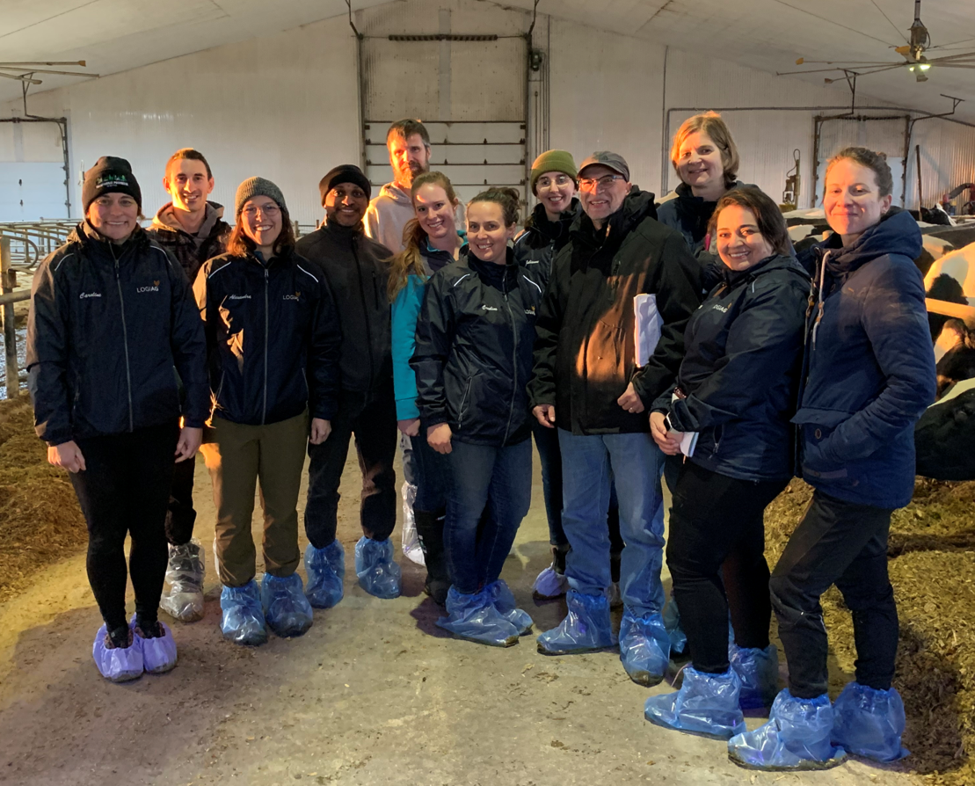
Caption: The Logiag team at a participating dairy farm
Building collaboration on credible foundations
Validation and verification helped enhance the credibility of the program, creating the conditions for broader collaboration. Insetting is still a relatively new concept, and many companies initially had questions about its value, implementation, and integrity. As understanding and trust grew, more companies became willing to engage, creating real momentum across the industry. Credibility is what allows partners to move forward together: Requirements related to traceable primary data, the prevention of double counting and free riding, as well as independent validation and verification, helped reassure partners, build confidence in the approach and generate real momentum across the sector.
The involvement of partners such as Group Bel Canada reflects the growing confidence in the model and its potential to deliver meaningful impact. As part of this initiative, Group Bel Canada aims to reduce carbon emissions from its upstream dairy supply dedicated to Mini Babybel® production at its Sorel-Tracy plant by approximately 30%. This represents a reduction of 12,000 tonnes of GHG emissions by 2031 - equivalent to the average annual emissions of approximately 10,000 cars.
The partnership between Group Bel Canada and Logiag is part of a shared value approach that complements efforts already underway in the Canadian dairy industry, aiming to generate sustainable benefits for both producers and the value chain, and help support the decarbonization of the dairy industry as a whole.
“Decarbonization of our value chain is a strategic priority for Bel. Through our partnership with Logiag and its Dedicated Dairy Farms program, we are turning our commitments into concrete action by supporting sustainable, measurable change on Quebec dairy farms.” – Group Bel Canada
Interested in validating or verifying your agricultural Scope 3 project?
SustainCERT offers a suite of validation and verification services for value chains, including for emission factors and for demonstrating credible interventions.